Many of the schools we work with are private schools, but in
Kenya, unlike many other countries, the private schools are not rich – in fact,
most of the schools we work with are very poor, which is why they are so
grateful for help from our volunteers!
Teaching projects are based in two regions, the capital
city of Nairobi and in the beautiful seaport of Mombasa. You don't need any qualifications to participate in a
teaching placement in Kenya.
ABOUT THE PROJECTS: Our
teaching placements are based
on the Island of Mombasa within the suburbs.Situated on the coast,
Mombasa is generally renowned for its laid back culture, but the schools
offer a different contrast. They ask for your support to help push the
children's education forward, and to help improve teaching techniques for
the teachers.
You will
teach in schools where the children range from 2˝ years of age, up to about 16 and your help is an important part of their development.
If you'd like to teach younger children, you'd be especially
appreciated!
Kindergarten and Children
up to the age
of 16 in a formal teaching environment.
Social care work with street
children, in schools and on the streets.
Most schools in Mombasa are quite small
and so you will instantly feel as though you are part of the family!
They generally range from 100 to 300 pupils at one given time. This means
that class sizes are also fairly small and very manageable, normally ranging
from 20 to 40, although occasionally you may have smaller classes.
Some of the schools are boarding
schools and
some are
for orphaned children. Other schools we work with include day
schools, privately funded schools, and some are even church schools. As
in Nairobi many of the schools are in very underprivileged areas,
with a lot of the children coming from a cross-section of backgrounds;
mostly
from the poorer communities.
One of the
schools keeps chickens and goats so that the children can learn the
important things in life,
one of which is
to respect and to take care of others. Mombasa is
a very friendly place and the schools are no exception. You will be
inundated with questions from both the teachers and the children!
You will
normally assist the Kenyan teachers to start with, but depending on your
ability you may be given complete control of a particular class or group.You will
receive
a lot of help and support from the Kenya teachers and staff at the schools
to help you prepare for your lessons and settle you into your role as
teacher; and,
like all Kenyans, they are very friendly and patient and are always
willing to help.
You will
be able to teach a specific subject of your choice if you wish to, such as
mathematics or science. In addition, for those of you who enjoy sports,
you will be glad to know that sports are also very popular
and the schools would love for you to help out
with these during game periods.
The facilities are poor, but football and volleyball have quite a
following.
The
children have a fantastic air about them, and you will be immediately
welcomed in by groups of children running up to greet the new teacher. The
children and teachers are so grateful of the help that it will be hard to
stop them smiling! The teachers and children will make you very welcome and
you will spend a lot of your time visiting families and generally
socialising.
Even during school holidays there may
also be work available at a couple of the schools. This will involve a
kind of social work, where you will play and look after the children. You
may also be asked to help teaching with children who live on the street.
A "Typical Day" in the life of a teaching placement - by
an ex-Travellers volunteer:
Get up at 6.45, take a bath, have breakfast etc.
Arrive at school at 7.45.
I then taught lessons until lunch, which was 12 - 2pm.
Afternoon lessons were from 2 - 5, but I was able to leave
at 4pm. I usually then planned my lessons for the next day or did
marking etc.
After that I went swimming or to the gym before dinner.
Evenings I either watched TV or went out drinking!!
Weekends I went to the beach, friends houses etc.
Harriet Carr volunteered with
Travellers and took the pictures, right. She says;
"These pictures are
from my placement in Bombolulu, Kenya. I think I've pushed the
amount of attachments I'm allowed to send to the limit because I
love all my pictures so much! My time in Kenya was the best
experience of my life. The smiles beaming off each child could fool
anyone into thinking they were the most well off children in the
world. I spent my time teaching the children English, Creative Arts
and P.E as well as playing with the children and painting
classrooms. It was amaaazing! Thank you so much"
SCHOOL
HOLIDAYS:
The education system has three terms in a year in primary
and secondary schools that basically stretch for about three months
semesters with about a month break in between. Thus students are in class
from:
First term:
6 January to 4 April
Second term: 5 May to 8 August
Third term: 8 September to 28 November
There will be slight school variations on
the above school dates, as well as
approximately one
week examination periods at the end of
every term. During this time your help is needed with the examinations and
with the marking of papers.
Different schools have slight changes to the dates of
closing and opening but they do not deviate by more than a week or at most
two, so if you're thinking of doing this project during a holiday period
please speak to us.
During School holidays, there are other opportunities to
teach children. This will normally be based at the schools where we have
our
'Social Care Work Placement' where you will provide help to street children.
This may either be within a school or out on the street. You would mostly
be playing games and generally interacting with the children. The teaching
hours during the school holiday terms are fewer than normal and will most
probably be from morning to mid-day. (Please see our care work placement).
Before you go - you can enroll in a
1-day
intensive open teacher training day (optional) to help you teach if you
have no previous experience and would like to gain a little
teaching knowledge.
IN MOMBASA: Your accommodation will vary, depending on which school you're placed
in. We have different types of accommodation, but you will most
likely live
with a
local
family. Volunteers and family members frequently become very good friends
and even stay in touch once the volunteers have left the country. Living
with a family also gives you the opportunity to experience the true African
experience from the inside and
not just as a "tourist" on the surface of the country.
My family were fantastic and went
beyond their duties to make me welcome.
Njeri [Travellers' Mombasa
Organiser] was always helpful
should I need anything." Caroline Chadwick, on her placement in
Mombasa
When accommodation is limited,
we occasionally place volunteers in a local Guest House
which is very comfortable and convenient for access into town.
Occasionally the houses that we use may change owing to
availability, so the facilities you can expect may change accordingly.
Your school should be within walking distance, which will enable you to go home
for lunch if you want to. Many Kenyans choose to eat locally for lunch on roast
meat called "nyama choma" - a delicacy that you'll talk about for a long time!
"I learnt about the country and the
people who live there. I think more so
than a lot of other volunteers because I was on my own and therefore tended
to mix with the locals rather than other volunteers. Living with a family
also encouraged this."
Colourful Matatu, the local transport
A LITTLE
ABOUT MOMBASA
Mombasa is the second most important city in Kenya
(after Nairobi). It is the main
port for Kenya and the surrounding countries, as well
as being the oldest town.The pace of life is relaxed and people of Mombasa enjoy themselves
(particularly on Friday and Saturday nights!).
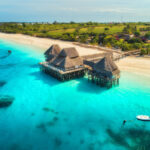
A spectacular coral reef run
for 480 km along the palm-fringed coastline.
The waters below are filled with marine life,
while up above a huge diversity of birdlife occupies
the mangrove forests or overhanging cliffs.
The beaches of Kenya have become one of the
world's great playgrounds, with plenty of opportunities for water sports or
simply sunbathing. More than half of the country's international hotels are
based along the Coast. The sun shines all year round
and the diversity of activities is unequalled.
Another factor that makes
Mombasa a wonderful place to visit is the exciting nightlife. There are
many nightclubs situated along the North and South Coasts of the town, all of
which have different themes that cater to different crowds. Many hotels also
have their own entertainment events
Most hospitals,
businesses, banks, shops and markets are situated in the
heart of the town. Being a small town
(about half a million population), Mombasa does not have a subway system.
However, one can easily get around using the local bus service; or for a “truly
Kenyan experience” a ride in a “Matatu”- which is quite a unique adventure
You have the option to arrange your
own flights or we can assist you with your flight arrangements. If you would
like us to do this for you, we will liaise with you regarding available flights
and dates to suit you. All arrangements for your flight bookings/payments will
be fulfilled by Murray Rogers Travel Ltd., ATOL No. 6856. (Read more about Murray Rogers Travel Ltd.)
Where possible, we arrange for two or more people to travel on the
same flight and we will let you have the names and telephone numbers of other
volunteers on your flight, so that you can chat to each other or even meet up
before leaving for your placement.
Where possible, all flights we arrange for you
have changeable return tickets because many of our volunteers choose to extend
their stay once they are in their destination country. Changeable return tickets
enable you to do so, within the limits of your visa and the level of your air
ticket, of course. If you choose to book your own flights, you should endeavour
to get a changeable ticket. We meet you at the airport regardless of whether you
make your own travel arrangements or not.
Support: You'll fly into Mombasa where you'll be met by
our local Manager Njery Wathika or a member of her staff. She will take you
into Mombasa and get you settled into your accommodation. You will then
receive an induction into the country, and be taken to your placement
and introduced to everyone.
Volunteer with baby elephant
VISAS:. In countries where visas or
immigration documents are required, we'll send you all the necessary forms and
information and make the process very easy for you.
To read about the extensiveSupport & Backup
we provide in our countries, please
click here.
We can also arrange your flight
dates to give you additional time at the end of your project for travelling
around and sightseeing - this is a fascinating and wondrous country!
PRICES
To see the Prices of this project and all
our other projects in Kenya, please
click here
Prices
include
Food & accommodation while on your project,
2 T-shirts, if required
for your project
All support and backup
during your programme
Meeting you at the
nearest airport, where appropriate, but exclude international travel.