 |
| |
|
|
 |
|
Next weekend TEFL Course:
6/7 February |
|
|
| |
|
ABOUT SRI LANKA
"Wow
– where do I start?? I have just had the most amazing experience
of my
life, the only bad part was that it had to come to an end."
Sri
Lanka is famous for its 1,600 km of unspoilt, golden beaches.
It's a paradise
Island shaped like a tear drop in the Indian Ocean. Formerly known as Ceylon
and famous for its wonderful Tea, Sri Lanka is a vibrant country with an
incredible history. It's a country of 18 million people; rich in its
diversity of culture, race, language and religion.
The island has
an abundance of natural resources, fauna and flora, mountains, rivers
and beautiful beaches. It is located at the crossroads where East meets
West and is regarded as the gateway to South Asia.
The
hill country has gorgeous rolling hills
and tea plantations. The entire island is teeming with bird
life and exotics like elephants and leopards.
The people are friendly, food delicious and costs
low! A stunning island filled with
beaches and
wild
life sanctuaries like the Elephant Orphanage, ancient cities, hills, beaches - and most of all, it's
incredible beauty.
Letter from Travellers Volunteer Alice Nimmo:
‘Hello Travellers, I just wanted to let you know what a wonderful time I
had in Sri Lanka in March this year at the elephant orphanage! I
can't fault the experience at all, and the staff were fantastic.
I have definitely taken a love for visiting countries of completely
different culture now, and hope I can take part in another voluntary
work placement in Africa in the next couple of years. Thank you for all
your help, you were fantastic at sorting it out for me and nothing ever
went wrong, apart from the monsoon season coming a little earlier than
planned!
Siresh was
fantastic and was always concerned for the safety of us - he also had a
very good sense of humour and the language barrier was ever so funny.
And also Chandana, who cooked amazing food, I was in heaven with all
the spicy curries, and Ajeet for keeping the house so clean, oh
yes, and who could forget Mandulla the van driver, always on time and
Nirangela the wacky chirpy lady. Thank you again and hope to see you in the future.'
There's good swimming at any number of
beaches along the south-western coast. Excellent scuba diving, snorkelling
and surfing are found at Hikkaduwa, there's pleasant snorkelling
at Unawatuna, and sailing, windsurfing and water skiing on
the Bentota River.
For trekking, try climbing Adam's Peak or
walking across the strange silent plateau of Horton Plains near Nuwara
Eliya to see the 700m (2296ft) drop at World's End.
"The people I spoke to at Travellers in the UK were fantastically helpful
and very friendly.
I felt I could have asked them about anything."
Joanna Blundell – Sri Lanka. Animal life is profuse and includes the ubiquitous
elephant, as well as leopards, deer, monkeys, sloth bears, wild boar,
cobras, crocodiles, dugong and turtles. The island is an important
seasonal home to migrating birds, including flamingoes, who flock to the
lagoons, wetlands and bird sanctuaries for respite from the northern
winter.
Climate:
The driest and best seasons are from December
to March on the west and south coasts and in the hill country, and from
May to September on the east coast. December to March is also the time
when most foreign tourists come, the majority of them escaping the
European winter.
The coastal stretch south of Colombo offers palm-lined
sandy expanses as far as the eye can see. The Kandyan dances, a
procession of elephants or the masked devil dances. Then there are the
ruins, ancient and inspiring architecture in the cities of Anuradhapura
and Polonnaruwa to satisfy any archaeologist.
Udaya Nanayakkara,
Chairman,
Sri Lanka Tourist Board, says ...
"Sri Lanka
has been the focus of the world’s attention since the tsunami hit our
shores on December 26, 2004.
And while we will never forget the enormous impact on our coastline and
the sadness caused by the deaths of 107 tourists and 30,618 Sri
Lankan's, our people have shown a remarkable
resilience, an amazing determination to rebuild our lives and our nation,
to emerge even stronger than we were before.
Tourism
is key to that rebuilding process. A
healthy tourist industry will provide jobs and in turn the dignity that
will put the world-famous smile back on Sri Lankan faces.
In urging visitors to return to our shores, it is important to present the
real facts about Sri Lanka, a true picture of the situation on a daily
basis."
“Having finally returned home from Sri
Lanka, I would like to say a big thank you to everyone at Travellers for
helping to organise my trip.
I had the most amazing time and will definitely be going back there as soon
as possible! I really enjoyed my placements, living in both the Ja-Ela and
Kegalle houses was great fun and I’ve made some fantastic friends.”
Jennifer
Rowe |
|
|
.


Teaching: Two very different teaching projects in two
different locations. No qualifications required.. Orphanage & Care:
Care for little ones while relaxing under the tropical sun.
Sports:
Coaching Football: to poor children.
A very worthwhile and enjoyable project!
Elephant
Experience in an Elephant Orphanage: Based in the world-famous
Orphanage which is home to retired, abused or orphaned
Elephants.
Elephant
Conservation in Wasgamuwa National Park:
A true conservation project, back to basics in rural Sri Lanka - very worthwhile and enjoyable!
Colombo
Zoo: Assist in trying to uplift the animals' quality of life by
improving enclosures and keeping the animals mentally stimulated.
Work
Experience Placements: Gain practical experience in
Law - an excellent entry for
your CV!
Meditation
at a Buddhist Retreat:
You'll have
a truly remarkable experience enjoying or discovering meditation. If you
are looking for an experience of the body, mind and soul this is the
ideal course for you.
OPTIONAL ADD-ONS


ADDITIONAL INFORMATION


Click
here to read the South Asia Newsletter

|
|
ABOUT COLOMBO |
|
Colombo is the capital city and the commercial centre
of Sri Lanka, filled with shopping centres and all modern facilities.
The city has an eclectic blend of old and new,
traditional and modern, Eastern and Western. Colombo, the island's largest city, is noisy, frenetic -
and just a little crazy. Thankfully, the breakdowns, snarled traffic and
power cuts are received with a shrug and a smile. 'No problem' might be
the national motto; it's certainly the one phrase everyone knows and can
say.
Colombo is a relatively easy city to find your way
around. To the north is the Fort district, the country's business
centre, which has department stores, book shops, airline offices and is
the site of the Central Bank which the Tamil Tigers blew up in January
1996. There are also ample sights such as the clock tower, a former
lighthouse, the president's residence (known by incorrigible
traditionalists as Queen's House), and a cluster of colonial buildings
which lend the district an aura of bygone Empire.
Immediately south of here is Galle Face Green, a
seafront expanse of occasional green graced by cricket games, kite flyers
and trysting lovers. Cinammon Gardens, further south, is Colombo's
most fashionable neighbourhood, with elegant mansions, tree-lined streets
and the city's largest park. East of the fort is the pungent Pettah
bazaar district. Walk through and marvel at the riot of goods - fruit,
vegetables, meat, gems, gold, silver, brass and tin junk.
Culture buffs shouldn't miss the National Museum,
which has a good collection of historical works, the Art Gallery,
which focuses on portraiture and temporary exhibits by local artists, and
the city's many mosques and Buddhist and Hindu temples. After
familiarising yourself with Sri Lankan culture, check out the island's
fauna at the Dehiwala Zoo. The highlight here is an afternoon
elephant show. The closest real beach is at Mt Lavinia, a faded resort
10km south of the city. Budget accommodation, cheap food and the best shopping
can be found in the Fort and Pettah districts. Nightlife is moribund,
though a visit to the cinema in the Fort district is an experience.
|
 |
|
THINGS TO DO IN SRI LANKA
|
|
You will never be short of something to do in Sri Lanka -
wherever you are based on your project you will be able to reach some of
the most incredible beaches, cultural sites including ancient temples and
cities, aromatic tea plantations and exhilarating waterfalls in the
rolling hill country. The famous Pinnawala Elephant Orphanage is also a
"must-see" on this paradise island.
In Sri Lanka, every sight, sound and smell will engulf you
with new experiences. Take an early morning train ride from Colombo to
Hikkaduwa and watch in awe as you travel past some of the most incredible
scenery. Smiling children will wave at you from shanty towns lining the
outskirts of Colombo, but these soon give way to views across paddy fields
where buffalo and cows can be seen grazing. As your journey continues the
train tracks begin to run parallel to the beach and you will be left
mesmerised by the incredible sights in this friendly country.
EXCITING RURAL PROJECT:
Wasgamuwa - teach in the heart of this
amazing country!
|
 |
|
THE BEACHES |
|
The
Southern coastline of this little island is littered with long stretches
of deserted golden beaches. These are beaches that we Westerners merely
dream about and the reality is no disappointment at all. Soft golden
sands, glistening deep turquoise waters at refreshingly comfortable
temperatures, banana and coconut trees swaying in the backdrop breeze
and little wooden ocean side huts you can rent for under £5 a night!
Much of the coastline
is still in the stages of recovery and will be for some time following
the events of Boxing Day 2004. However with the blessing of continuous
tourism many of the beaches most loved by the island’s visitors are
getting back on track and welcoming the travellers back in. Our
favourites are:
NEGOMBO:
To the north of
Colombo lies Negombo, a busting fishing town with golden beaches and a
pallet of colour provided by sails and boats against the deep blue of
the ocean.
UNAWATUNA:
A sleepy peaceful cove with deep still water and a temple overlooking
the bay from the protecting cliffs.
HIKKADUWA:
A long stretch of
beach with plenty of hostels, restaurants and some nice bars, not
forgetting the impromptu beach parties held on the beach front bars
blaring Bob Marley, Eric Clapton, Led Zeplin and many other classics!
Sri Lanka is a conservative island brimming with culture and Hikkaduwa
offers an exciting opportunity to holiday for the odd celebratory
weekend! Many a volunteer birthday has been seen in over Hikkaduwa
cocktails. You can also body board and even surf on this beach.
MIRISSA:
Perhaps a contender for the most beautiful beach in the world. Long,
deserted and hot. You know you have got away from it all as you sit and
watch the sun set over this horizon…The snorkelling is also incredible
here.
ARUGAM BAY: This tiny fishing village is Sri Lanka’s
newest hot spot and hosts the best surfing and an easy going happy party
atmosphere. With its wide sweeping beach in front of the village and
year round gorgeous swimming it is no surprise that this bay has
developed into a low budget travellers haunt.
"Thank you
for the experience you gave me, it was stunning and a memory that always
always always brings me warmth" Tim
Hancock |

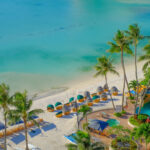
Hikkaduwa Beach

Morning sunrise on the south coast
|
|
KANDY, TEA PLANTATIONS AND THE HILL COUNTRY |
|
Known as the
‘Royal City’, Kandy is the laidback capital of Sri Lanka’s beautiful
hill country. The second biggest city in Sri Lanka (next to Colombo),
Kandy has much to offer. From the golden Temple of the Tooth to the
heaving street side stalls. The smells of aromatic spices and the hectic
clutter of city life are in stark contrast to the drowsy village
existence out of town.
Kandy is
situated in a bowl of hills and takes 1 hour to get to by bus from the
Pinawala Elephant
Orphanage. A vast lake forms a centre piece of the town and
throughout the year several fascinating festivals are held in Kandy.
This is the town to see traditional Sri Lankan dancing and the Kandy
festival in July is an experience not to be missed. Elephants in
traditional dress parade the streets and the town ignites with music and
dancing and general Sri Lankan mayhem! Bus and Train routes from Kandy
connect you to the rest of the island.
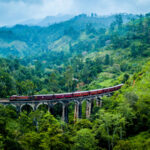
The Hill Country
is exceptionally beautiful, with crystal clear waterfalls and tea
plantations dotted throughout. The temperature in this region stays cool
all year round, in an atmosphere of early morning Spring. Everything is
green and lush and the landscape is elevated with layers of grass knolls
and jagged waterfalls with dense mountain forest clinging to the upper
slopes. The days drift by in the hill country with not much to do but
drink tea (in abundance) and absorb the serenity and breathtaking walks
and views. There are several little towns that are certainly worth a
visit, such as Nuwara Eliya. There are also some majestic feats of
nature to explore, namely Worlds End and Adams Peak.
Worlds End
is located in the Horton Plains, which is a rolling highland terrain of
grassland interspersed with forest and unusual high-altitude vegetation.
The plains reach over 2000 meters high with the mountains of
Kirigalpotta and Totapola looming up from the edges of the plateau. The
most tremendous feature of the strange silent world of the plains
however is Worlds End, where the plains abruptly stop leaving you
hovering over a straight drop of 880 meters.
Adams Peak,
hailed as the sacred
footprint of Adam, the Buddha, Lord Shiva and others, many have laid
claim to this fascinating centre for pilgrimage. Whichever legend
motivates you, nobody should leave Sri Lanka without having taken part
in this extraordinary experience into the spiritual realm. Adam’s Peak
(known also as Sri Pada) is a mountain peak where Sri Lankan in myth,
the butterflies go to die. It has been a pilgrimage centre for over 1000
years. Today the pilgrimage begins on December’s poya day
(full moon) and runs until the Vesak festival in May.
A temple sits at
the mountain’s summit and resting places are dotted along the steps for
weary pilgrims to rest upon. During pilgrim season there is a steady
stream of dedicated pilgrims and the occasional tourist climbing the
5200 steps to the pinnacle. If you are fit and well and decide to climb
Adams Peak it is an unforgettable experience. Climbers leave anytime
between the fall of darkness (7pm) and 2am from the village of
Dalhousie. Take a warm sleeping bag with you to keep you warm overnight
when you reach the summit. The climb is mostly steps and taking into
account plenty of rest stops you should reach the peak in 2.5 to 4
hours.
You want to arrive before dawn (about 6:30am), settle into your
warm clothes and sleeping bag and watch amongst the throng of pilgrims
in awed silence as the sun rises casting a mountain shaped shadow over
the land before you. Take plenty of water although during season there
are also teahouses lining the journey. |

 |
|
PINNAWALA ELEPHANT ORPHANAGE |
|
Pinnawala Elephant Orphanage
is a sanctuary for rescued, injured or abused
elephants and attracts visitors from all over the world to view these
magnificent animals. Around 70 elephants have found homes at Pinnawala,
including some small babies who have been born into the herd.
Visitors are permitted
to walk around the orphanage grounds and watch some of the elephants
being fed. At 10am and 2pm the elephants are taken to the river for 2
hours where they wash and play in the water. These incredibly gentle
animals are fascinating to watch, and the surrounding palm trees provide
a dramatic backdrop to this daily ritual.
Our 'Elephant
Experience' Project at Pinnawala is outstanding - for a description of the
placement and the work you can do in this stunning place, please
click
here.
History: The Pinnawela Elephant
Orphanage, established in 1975, commenced with seven orphans. Today some
of these orphans enjoy the fortune of seeing their grandchildren born in
the same location. The original objective of establishing the orphanage
inclined more towards tourism, but is soon became a conservation and
educational centre. With the help of local and foreign elephant experts,
Pinnawela started a scientific captive-breeding programme for elephants.
The free movement of the herd enhanced the chances for respective
individuals of both sexes to get together and mate. The nearby river
played a dominant role in this regard and in 1984 the first baby
elephant of Pinnawela was born. |
 |
|
AYURVEDA MEDICINE |
|
“Ayurveda”
is not only a form of medication – it is a total way of life know to
generations of Sri Lankans for over 3000 years. It is a gentle method of
treating the root causes of illness in both mind and body.
Ayurveda Medicine is
widely used in Sri Lanka for a variety of ailments. Pronounced eye-yer-veda,
this ancient medicine is directly translated as the ‘science of life’.
It uses herbs, oils, metals and animal products to restore the equilibrium
of the individual’s dosha, or ‘life force’. Ayurveda postulates that
disease and illness occur when the individual life force is out of balance.
There are many
Ayurvedic treatments around Sri Lanka. Many are not established practices
and the practitioner is often unqualified. However there are many reputable
practices where the practitioners are trained to degree level in Ayurvedic
practice. The Lonely Planet travel guide lists a selection of trustworthy
establishments. Treatment involves oil massage and herbal baths and can take
some time and several treatments to have full effect.
Sri
Lankans will tell you, "It is a gentle and relaxed treatment for both
mind and body, one that leaves you feeling light, tranquil, yet filled with
the zest and energy that our ancestors experienced and benefited from." |
 |
|
ANCIENT CITIES AND TEMPLES and ... ADVENTURE! |
|
The beauty of Sri
Lanka is its diversity. Amongst her dynamic scenery are many temples,
ancient cities and fascinating cultural heritage. The most impressive
lie in Sri Lanka’s ‘Cultural Triangle’ where you can visit Anuradhapura,
Dambulla and Sigiriya.
Anuradhapura
For over 1000 years
the palaces of Anuradhapura were the ruling ground for the Kings of Sri
Lanka. It was the most important of the ancient cities, yet due to the
length of time passed since its downfall this can be difficult to
comprehend for today’s visitor.
Today the city is a pleasant place to
visit, with shady trees, nice guesthouses and a distinct lack of
overdeveloped concrete.
Dambulla
Dambulla is famous for its cave temples where legend
has it King Valagambahu took refuge in the 1st century BC and
had the caves carved into magnificent temples and statues of Buddha.
Large paintings of a reclining Buddha decorate the interior of the caves
and make quite a sight.
There is a climb to the caves that sit atop a
hillside, and stunning views spread out over the Sri Lankan countryside.
You can see the marvellous silhouette of Sigiriya also from this
vantage. Monkeys run wild around the caves, screeching to one another
and perching precariously on ledges and tree tops gazing out at the
view. Watch out for them, they are not shy and they will stroppily
snatch anything off you that they may like for themselves, particularly
food!
Sigiriya
This magnificent rock
fortress is one of Sri Lanka’s top tourist attractions. One legend holds
that the son of King Dhatusena of Anuradhapura, Kasyapa who was
overthrown in 477 prepared the rock fort as he expected an invasion.
The
invasion never occurred and Sigiriya later become a monastic refuse in
the 16th and 17th centuries. It later fell into
disrepair. It is an archaeologist’s dream with remaining evidence of
engineering, urban planning, hydraulic technology, gardening and art.
ADRENALIN
JAUNTS:
White Water Rafting: Sri Lanka’s boulder stream rivers
are the ideal setting for white water rafting. This is the best way to
see the stunning environment what this region has to offer. Many tours
are available and many begin with days of action, rafting the white
waters. This high adventure is suitable for fish time ‘go for it’
rafters and experts alike. Rafting has become a very popular
exciting yet safe adventure sport option.
Rock Climbing and Mountaineering:
Mountaineering is an adventure sport that requires skills and levels of
fitness that few other adventure sports can match. The mountain ranges
in Sri Lanka offer breath taking, enthralling, climbing routes. Climbing
is all about discovering the natural world around and with you.
Hiking and Trekking: There’s no better way to
explore the natural scenic beauty of this island with diverse climatic
zones. Trekking is an excellent way to explore a country, people, their
traditions and beliefs. Paths and campsites have been set up to give
nature lovers the experience of a lifetime. All possible steps are taken
to ensure local community benefit and nature conservation in keeping
with all international camping guidelines.
Canoeing & Kayaking: This relatively new sport
is rated as the most adventurous of all adventure sports. It involves
descending a stream as it drops over waterfalls and boulders. In Sri
Lanka they have low waterfalls for beginners and some as high as 700
feet for the very experienced - all surrounded by breathtaking scenery. |


Paintings at the famous Sygiria
|
|
MISCELLANEOUS
INFORMATION: |
|
Banking hours: |
0900 hrs. to 1500
hrs., Mon-Fri. |
|
Credit Cards: |
All the major credit and charge cards are
widely accepted. |
|
Currency: |
One Sri Lanka Rupee is made up of 100 cents. |
|
Electricity: |
Voltage : 230 – 240 volts 50 Cycles A.C. |
|
Food: |
Many races have contributed to Sri Lanka's culinary diversity - Indians,
Arabs, Portuguese, Dutch, British Malays, Chinese
..... as you can imagine the range of foods is immense! |
|
Public Holidays & Celebrations:
|
Sri Lanka probably has more holidays than almost anywhere else in the world
– Buddhist, Hindu, Muslim, Christian and national festivals are celebrated.
Every full moon day or ‘Poya Day’ is also a Buddhist holiday. On these days
all public places of entertainment are closed.
Click here to see the Celebrations and Public Holidays for Sri Lanka for 2010 |
|
Time Difference: |
Sri Lanka is 5 hrs. ahead of Greenwich Mean
Time. |
|
What to Wear: |
All-year-round wear
should be light cotton, drip-dry dresses and light-weight suits,
Comfortable shoes or sandals, a wide-brimmed beach hat and sun
glasses. However, in the hill country temperatures can drop to as
low as 10’C - so take some jumpers with you.
|
|


 |
|
"I'd just like to say that the Travellers
teaching placement in Sri Lanka was brilliant, couldn't fault it at all.
Doing the placement was the best decision I ever made, it was
absolutely fantastic and I was pretty sad when I finished. Met some really
nice people too."
Gemma Leonard
Before you leave on your placement with Travellers, we
will send you LOTS of information about your placement and about the
country itself, with travel tips, useful info on the culture, money,
banking hours, transport, where to go an what to see.
SRI LANKA ON THE INTERNET:
|
|